

Foster, Kinship & Family Support
Practical, trauma-informed support for adults caring for children and young people through complex behaviour, relationships, transition and change.

Caring for a child can be deeply rewarding. It can also be incredibly difficult when the usual approaches don’t seem to work.
You may be supporting a child who becomes overwhelmed quickly, struggles with boundaries or transitions, pushes you away, shuts down, becomes angry, or finds it difficult to trust and accept connection. You may have tried different strategies, sought advice and still be left wondering what you are missing.
Sometimes, the behaviour we see makes more sense when we understand what sits beneath it.
For children who have experienced trauma, separation, disrupted caregiving or inconsistent relationships, safety, trust and connection can develop differently. Their responses may not always make sense when viewed through a traditional parenting lens.
This support gives you somewhere to bring the difficult parts — without judgement. Together, we look at what may be happening for the child, what happens between you when things become difficult, and practical ways to support regulation, connection, boundaries and the relationship between you.
You don’t need another person telling you to “just be consistent.” You need support that considers the child in front of you
LOOKING BEYOND BEHAVIOUR
Behaviour gives us information.
A child who withdraws, becomes angry, refuses, struggles with transitions or rejects connection may be responding to more than the immediate situation.
A trauma-informed and developmental approach considers what happens before and after the behaviour, what the child may be finding difficult, their developmental needs and how relationships and the environment may be influencing what happens next.
Understanding behaviour does not mean removing boundaries.
It helps us respond more effectively.

WHAT CAN WE WORK ON?
Understanding Behaviour
Looking beyond the behaviour itself to explore patterns, triggers, unmet needs and what may be contributing to a child’s response.
Regulation & Co-Regulation
Understanding how stress affects both children and adults, recognising escalation and developing practical ways to regulate your own response while helping a child move toward greater safety and regulation.
Connection, Attachment & Relational Safety
Understanding how separation, loss, disrupted caregiving and previous experiences can influence trust, connection and relationships — and exploring ways to build predictability, responsiveness and relational safety over time.
Communication & Boundaries
Developing clear, consistent ways of communicating and maintaining boundaries without losing sight of connection, particularly when emotions are high.
Transitions & Change
Supporting carers to prepare children and young people for changes in placement, family contact, school, routines, adolescence, increasing independence and transitions toward adulthood.
Carer Capacity & Wellbeing
Recognising the emotional load of caring, understanding your own responses and developing strategies that help you remain sustainable, intentional and connected in the caring role.
YOUR RESPONSE MATTERS TOO
When a child is overwhelmed, the adults around them can become overwhelmed too.
Co-regulation begins with recognising what is happening in both the child and ourselves. Tone, pace, body language, expectations and the way we respond during difficult moments can all influence what happens next.
The goal isn’t to respond perfectly.
It’s to become more aware of your own responses and develop strategies that help you respond intentionally rather than automatically.
Over time, predictable and responsive interactions can contribute to greater trust, connection and relational safety.
Sometimes a small change in communication, timing, expectations or environment can significantly change an interaction.
INFORMED BY DEVELOPMENT, RELATIONSHIPS AND CONTEXT
Children don’t experience behaviour, relationships or change in isolation.
Support draws on trauma-informed, attachment-informed, developmental, strengths-based and systems perspectives.
This means considering the child’s developmental stage, experiences, relationships, family and care context, school environment and current stressors.
Rather than looking at behaviour in isolation, we consider the wider context in which it is occurring.
Theory is useful when it helps us understand what is happening and decide what to do next.
That is where the focus stays.
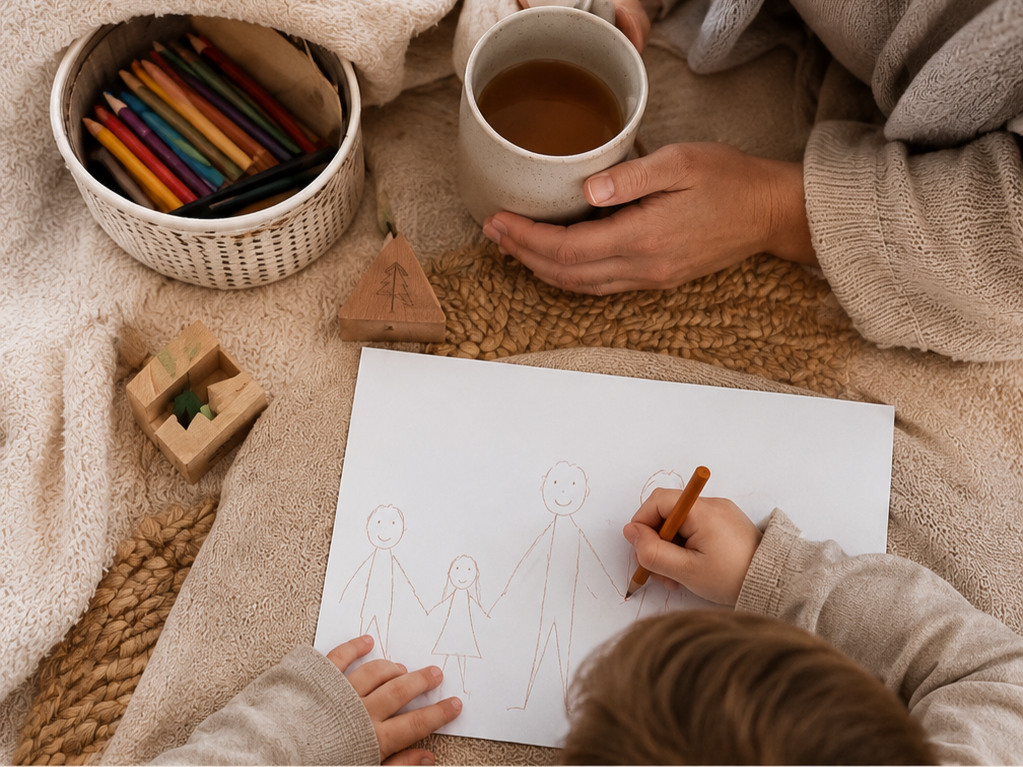
WHAT A SESSION LOOKS LIKE
We begin with what is currently happening and what feels difficult.
Together, we look at patterns, what may be contributing, what has already been tried and how both the child and the adults around them are responding.
From there, we develop one or two practical strategies to work with between sessions.
That might involve changing a routine, preparing for a transition, practising different language, strengthening a boundary, understanding what may sit beneath a behaviour, or developing strategies for regulation, co-regulation and connection.
You leave with something practical to try.
Where appropriate, a child or young person may also be involved in a session to support communication, connection or work through a particular challenge together.
CHOOSE YOUR SUPPORT SESSION
Foster, Kinship & Family Support
60 minutes | $165
For a focused concern, current challenge or ongoing support.
90 minutes | $220
For more complex circumstances where additional time is useful to understand the context and develop a plan.
In Studio | Noosa Heads
Online | Australia-wide
Organisations can also commission support for carers and families within their programs.

SOMETIMES THE BEHAVIOUR IS ONLY THE PART WE CAN SEE.
Understanding what may be happening underneath can change the way we respond — and what happens next.
Frequently Asked Questions
-
No. This support is available to foster and kinship carers, parents and other adults caring for children and young people.
You don’t need to be involved with the child protection system to access support.
-
Not in the traditional sense.
Rather than applying a single parenting approach, we look at the individual child, their developmental needs, experiences, relationships and current circumstances, alongside what is happening for the adults caring for them.
The focus is on understanding what may be contributing to difficulties and developing practical responses that fit your circumstances.
-
The primary focus of this service is supporting and strengthening the capacity of parents and carers. Children and young people may also be involved in sessions where appropriate.
This may include working together around communication, regulation and co-regulation, relationships, transitions or a particular challenge affecting the family.
Where a child’s needs require clinical assessment, diagnosis or therapeutic treatment outside my scope of practice, I will recommend support from an appropriately qualified professional.
-
Yes.
Organisations may commission individual sessions or ongoing support for carers and families within their programs.
Please get in touch to discuss organisational support and invoicing arrangements.
SUPPORTING CHILDREN STARTS WITH SUPPORTING THE PEOPLE AROUND THEM
When adults have greater understanding, practical strategies and appropriate support, they are better positioned to respond consistently to the children in their care.