
Why The Nurtured Studio?

The Nurtured Studio was built around a simple belief:
To meaningfully support people, we need to understand what is happening beneath what we can see.
Behaviour, stress, overwhelm, burnout, disconnection and difficulty coping rarely exist in isolation.
They are shaped by experience, relationships, environment, responsibility, adversity, nervous system responses and the systems people are living and working within.
For more than a decade, my work has centred around understanding those connections.
Today, The Nurtured Studio brings together trauma-informed practice, human behaviour, nervous system regulation and practical professional experience to support individuals, families, carers, professionals and organisations through complexity, change and sustained pressure.
The work may look different depending on who I am working with.
The foundation does not.
Understand what is happening. Look beyond the surface. Identify what is contributing. And determine what may genuinely help.
Why I do this work
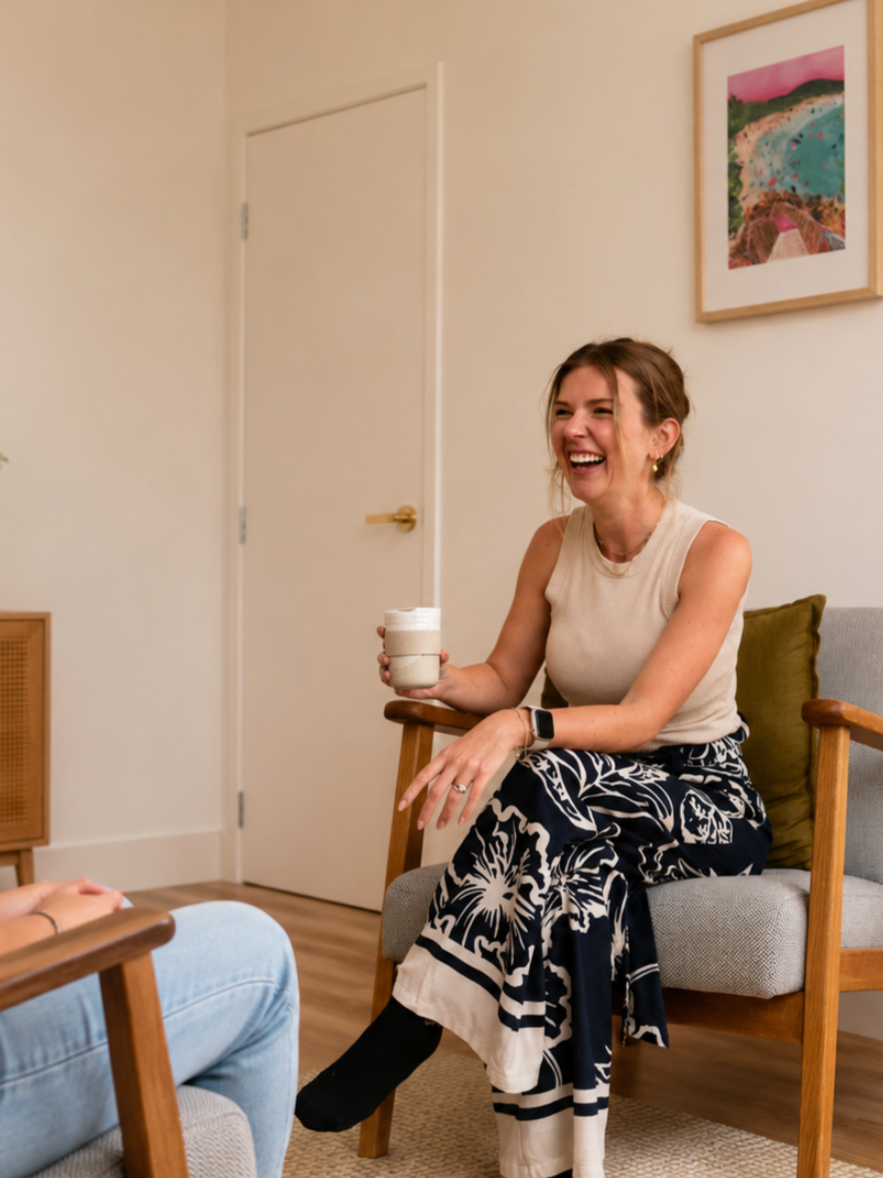

For more than a decade, my career has centred around one thing: understanding people.
I’ve worked alongside children, families, carers, professionals and adults navigating trauma, adversity, significant change and complex circumstances.
My professional experience has crossed education, child and family services, foster and kinship care, assessment, compliance, leadership, workforce practice and direct support.
Across very different roles and environments, I kept coming back to the same questions.
What sits beneath what we can see?
Why do some experiences remain with us long after they have ended?
Why can two people experiences similar situations, yet they are impacted so differently?
Why can someone understand something intellectually, yet continue responding to it emotionally or physically?
What actually helps create meaningful change?
Those questions shaped the direction of my career.
They led me deeper into trauma-informed practice, developmental adversity, attachment, human behaviour, counselling, stress and nervous system regulation.
And eventually, they led me to Transformational Breathwork.
Today, my work brings those areas together.
That might mean sitting beside a woman who has spent years holding everything together.
Supporting a foster or kinship carer trying to understand what sits beneath a child’s behaviour.
Helping a professional think critically about a complex situation.
Working with a team experiencing sustained pressure or burnout.
Or helping an organisation strengthen practice, workforce capability or the systems surrounding the people it supports.
The setting may change.
The question underneath the work often remains remarkably similar:
What is happening here — and what might genuinely help?
Why Breathwork?
Long before I trained in Transformational Breathwork, I was interested in what happens beneath behaviour.
Years of working alongside people affected by trauma and adversity taught me something important:
Understanding an experience intellectually does not necessarily change the way the body responds to it.
Someone can know they are safe and still feel constantly on edge.
They can understand why they respond a certain way and still find themselves repeating the same response.
They can have moved forward with their life while their body continues responding to stress, threat or experiences that happened years earlier.
I became increasingly interested in that space.
The space between what we know and what we feel.
That interest led me further into trauma, attachment, stress physiology and nervous system regulation — and eventually to breathwork.
Breathwork wasn’t where my interest in trauma began. It was something I discovered because of it.
What interested me wasn’t simply breathing differently.
It was the opportunity to work with the body alongside the insight, reflection and understanding I had spent years developing through my professional work.
Because sometimes understanding is incredibly important.
And sometimes understanding alone isn’t enough.
That is why I don’t see breathwork as a standalone modality.
I see it as one part of a much broader understanding of trauma, human behaviour and nervous system regulation.

Transformational Breathwork at The Nurtured Studio
Every woman who walks through my door arrives with a different story, a different nervous system and a different capacity for change.
That matters.
Because Transformational Breathwork isn’t simply something I facilitate.
It’s an experience I intentionally design from beginning to end.
I don’t follow a script.
I don’t deliver the same experience to every client.
And I don’t believe transformation needs to look dramatic to be meaningful.
Before we begin, we spend time understanding you — not simply why you’ve booked, but what your body has been carrying.
For one woman, that might be years of chronic stress and functioning in survival mode.
For another, it might be the exhaustion of people-pleasing, perfectionism or continually caring for everyone else.
For someone else, it may be a significant life event, relationship, loss or period of change that still feels present long after the circumstances themselves have passed.
That understanding shapes the session.
The pacing.
The music.
The intensity.
The support.
When appropriate and with consent, touch.
And importantly, when to encourage and when to allow space.
Throughout the journey, I’m continually observing what is happening and responding with care, intention and professional judgement rather than simply moving through a predetermined process.
Transformation Doesn’t Have to Be Dramatic
For some women, breathwork can be deeply emotional.
There may be tears.
Laughter.
Anger.
Relief.
Memories or emotions may surface.
For others, the shift is much quieter.
A breath that suddenly feels fuller.
A body that begins to soften.
A feeling of being less on guard.
A moment of clarity.
Or simply noticing that something feels different.
Both experiences are equally valid.
There is no expectation that your session should look like anybody else’s.
And transformation isn’t measured by how emotional a session looks.
It’s measured by how your life begins to feel afterwards.
The Session Doesn’t End When the Breathing Finishes
The period after breathwork matters.
I intentionally allow time for the body to settle and for you to notice what has shifted before rushing back into everyday life.
We talk.
We reflect.
We make sense of what arose where that feels useful.
Sometimes there are words.
Sometimes there aren’t.
Integration isn’t about forcing meaning onto an experience.
It’s about giving you enough space to leave feeling supported, grounded and able to carry the experience forward in a way that makes sense for you.
That care before, during and after the breathwork is a significant part of how I practise.

More Than a Modality
I haven’t just studied trauma.
I have sat alongside it.
I have worked with children whose behaviour was communicating experiences they didn’t yet have the words to explain.
I have worked alongside families and carers trying to understand what a child needed while navigating systems, responsibilities and uncertainty of their own.
I have worked with professionals carrying the responsibility of making difficult decisions in complex circumstances.
And I have seen what can happen when people continue functioning under sustained pressure because there simply isn’t space to stop.
Those experiences have shaped the way I work.
They taught me to remain curious.
To look beyond behaviour.
To listen before assuming.
To consider context.
To recognise strengths without ignoring vulnerability.
And to understand that what we see on the surface is rarely the whole story.
My work draws on professional experience across trauma, behaviour, child and family services, foster and kinship care, assessment, leadership, organisational practice and workforce development, alongside counselling principles, trauma-informed practice, nervous system education and Transformational Breathwork.
Different pieces of that experience become relevant in different settings.
That breadth is intentional.
Because people don’t exist as isolated problems to be solved.
Neither do families.
Neither do workplaces.
The strongest work considers the bigger picture while remaining practical about what can actually change.
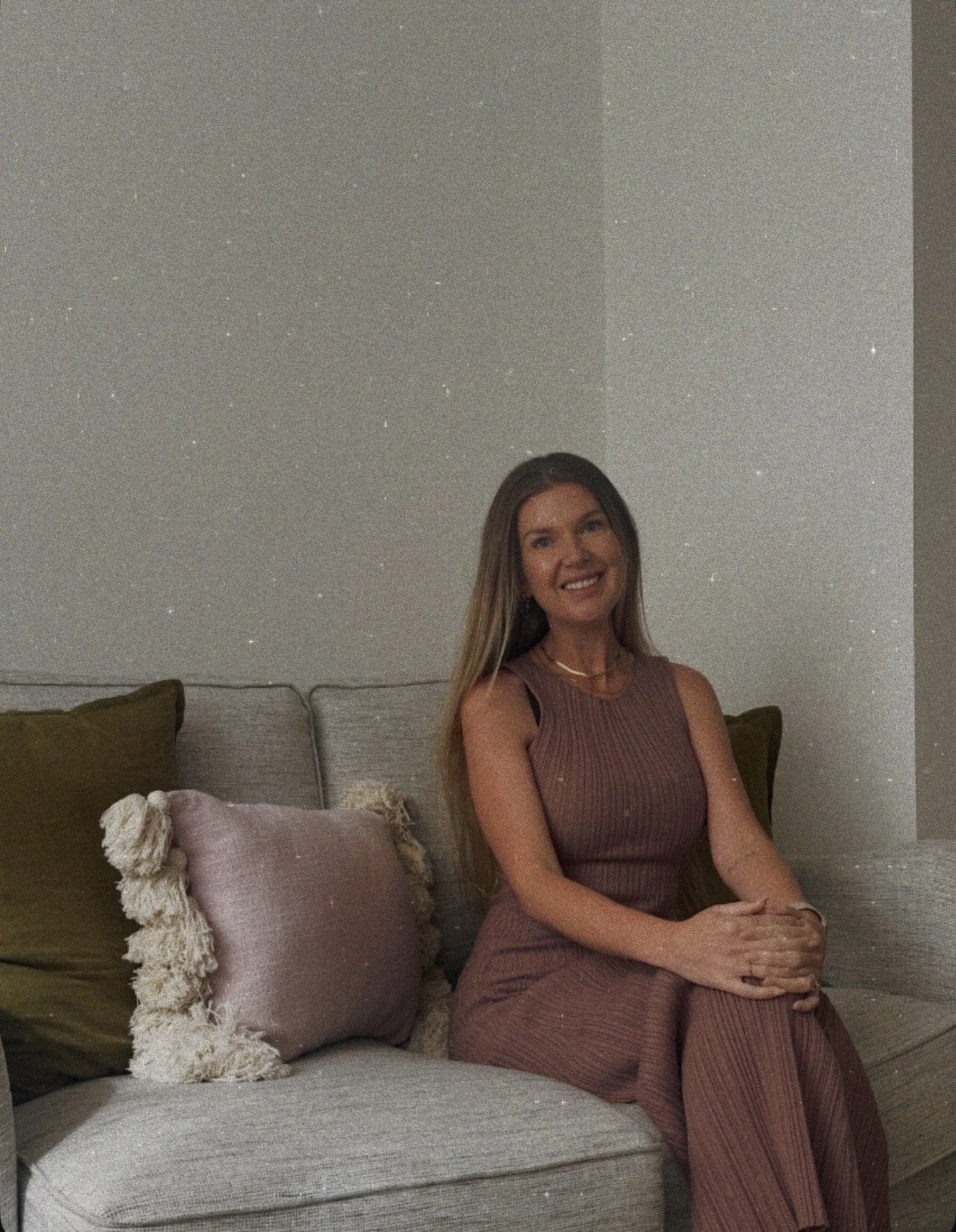
Beyond The Practitioner
Choosing someone to support you through deeply personal work is a big decision.
You deserve to know something about the person sitting beside you.
While my professional experience has shaped the way I practise, my own life has shaped the person I am.
I’m a wife, a mum to three incredible daughters and someone who understands that life doesn’t always unfold the way we imagined.
I’ve experienced seasons of significant loss, complex health challenges and moments that forced me to slow down and listen to what my own body was trying to say.
Those experiences didn’t make me an expert.
My professional knowledge has been built through years of experience, training, continued learning and working alongside children, families, carers, professionals and adults through complexity.
But my own experiences gave me something equally important.
Perspective.
Humility.
Compassion that can’t be learned from a textbook.
They reinforced something my professional work had already taught me:
We rarely understand somebody’s whole story from what we can see on the surface.
So when someone walks through the doors of The Nurtured Studio, I don’t expect them to arrive with the right words.
I don’t expect them to have everything figured out.
And I don’t assume I know what they need before I’ve taken the time to understand them.
The same principle carries into my professional work.
An organisation isn’t reduced to a problem.
A workforce isn’t blamed for burnout.
A carer isn’t defined by a difficult moment.
A child isn’t reduced to their behaviour.
And a person isn’t treated as something that needs to be fixed.
We start by understanding what is happening.
Then we work out where to go from there.
with love
Alyssa
One Studio. Different Ways to Work Together.
The Nurtured Studio works across individual, family and professional settings.
The services are different, but the foundation remains the same: thoughtful, trauma-informed and practical support grounded in understanding the person, environment and circumstances in front of us.
Services
For individuals, families and carers
Transformational Breathwork
Women’s Trauma-Informed Support
NDIS Capacity Building
Foster, Kinship & Family Support
Professional Services
For organisations, teams and professionals
Foster & Kinship Care Professional Services
Professional Training & Workshops
Organisational Consulting & Training
Workforce Wellbeing & Regulation

Begin Where You Are
You don’t need to have the right words.
You don’t need to have everything figured out.
And you don’t need to know exactly which service you need before getting in touch.
For individuals and families, you can explore the available services and choose the place that feels most relevant to what you are navigating.
For organisations, the starting point can simply be a conversation about what is happening, where the pressure or gap sits and what you would like to strengthen or change.
You simply need to arrive.
We’ll take it from there.